

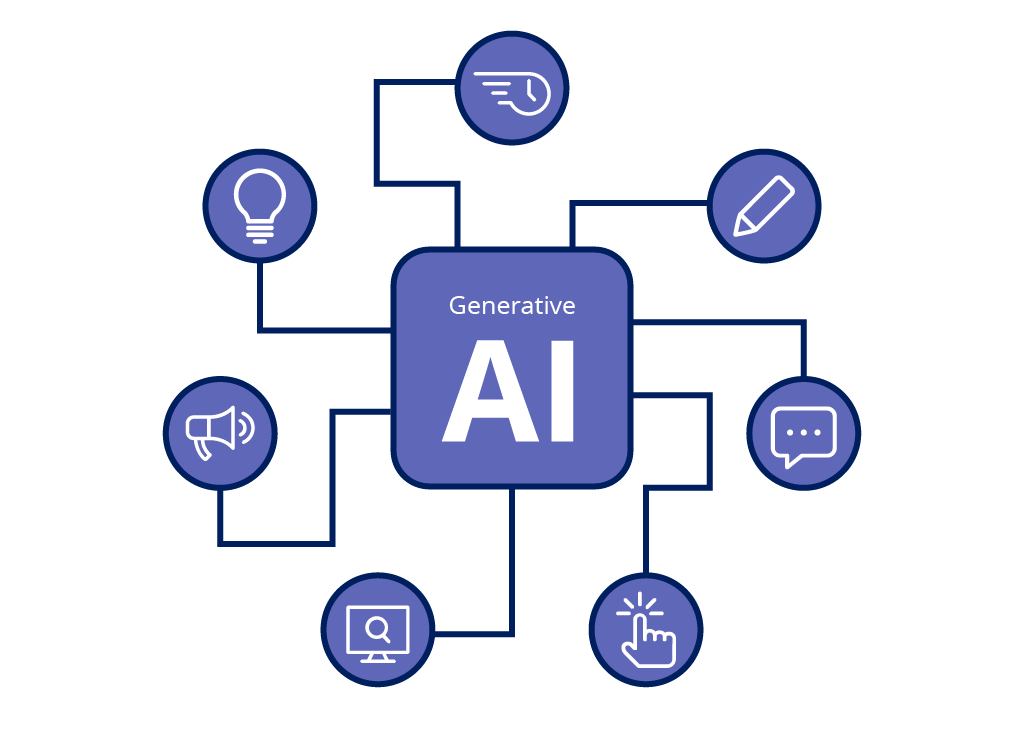
How does Generative AI work?
How does Generative AI work?
A simple guide for creators and content manufacturers
If you are eager for a filmmaker, market, start-up entrepreneur or student AI, do you have to wonder – how does it really work?
You probably write stories for AI tools, write music, produce photos or even edit videos. But what happens behind the curtain? Is this just a fancy copy paste engine? Or is something more complicated?
Let’s break it down to a clear, really world-in-the technical lecture, just a guided tour that these intelligent devices do what they do.
What does Generative AI really do?
Generative AI is like a smart creative partner who has been trained on large amounts of content – books, scripts, images, music, code, etc., based on this knowledge, it can then generate new content that appear, sound or read as it was created by a human.
But here is the key: it is not missed and revived. It learns patterns and then predicts what you should move on, depending on what you ask for.
For example:
You write: “Write a scene between the two brothers fighting against inheritance.”
AI thinks, “I’ve seen in all the stories, what do people usually say in such a scene?”
It then produces a whole new view that fits the style – not a copy, but a new creation based on the pattern.
This is the engine behind how this “pattern predation” AI works.
A simple analogy: Think of it as a very smart auto comat
You know how your phone predicts the next word when you write a message?
Generative AI works in the same way – but instead of predicting the next word, the next sentence, paragraph or a video frame predicts. And it does with a deeper understanding of reference, tone and style.
Imagine – you start writing the first sentence in your script, and AI begins to suggest what your characters can say further, how the scene may end, or even the music.
This is not magic. This is mathematics + data + training.
Core behind this: Trent model on mass dataset
Here is the place where it gets a little more technical – but still digestible.
The generative AI machine uses something called learning models, especially called a transformer (the most well-known example GPT-generative pre-controlled transformer). These models are trained:
Food them in a large amount of data – such as books, subtitles, wikipedia, website, movie script, etc.
Ask them to guess the next word and reward them as they get closer.
Do this millions of times, until the model begins to understand how people talk, write and do it.
Result? A system that not only knows “information” but can imitate human creativity.
Other model images (e.g. Dall-e), music (e.g. Suno AI) or video (eg pika laboratories or runway ml) – but the principle is the same: Learn the pattern, generate output.
Example: How does AI write a movie scene?
Suppose you are working with a Rajasthani language and you give chat to this sign:
“Write a scene between a bride and her mother before marriage, seen in a mansion in Jodhpur.”
What does AI do in the background here:
It recognizes great ideas: Bride, mother, emotional, cultural tone, jodhpur surroundings.
It draws from its own understanding of similar scenes, Indian weddings, dialogues, emotions, etc.
It then produces original lines and actions that fit your landscape.
This is not “address” about you or your project – it only knows what works usually in equally creative situations. You get a draft task. You delimit it with your voice.
It is co-building-and it is surprisingly sharp.
But can it do more than the lesson?
Absolutely.
Let’s see two powerful examples:
Runway ML – AI Video Editing Equipment
Use the case: You upload raw recording from your shot in Bikaner. The runway removes the background, the color characterizes the character film, and even fills the missing frame – without manual effort.
Why it works: The model has seen thousands of video samples and knows how lighting, objects and movements work together.
Midjourney – AI image generator
Use Case: You need concept art for Rajasthani Folk Music Videos. You describe it (“sunset behind dunes, dancers in ghoomar fabric”), and the tool produces many creative scenes.
Why it works: Millions of images were trained and learned to mix colors, style and spirit.
So whether you are Jodhpur Content Creation Agency or the student who shot your first wheel, these devices were used from concept to creation.
Is it just copying your luggage?
No, this is a common myth.
Generative AI does not copy on the Internet. It learns patterns – such as sentence structure, dialogue flow, camera direction, mood change, light styles – and then creates something new that fits your input.
Of course, you still need to investigate for originality and make sure it fits your brand or story. But 95% of the time, it gives you something new to work.
Restrictions of being aware of
No devices are correct. Here are some things to remember:
This can make facts wrong. If you produce educational or customer -affected content, always create facts.
It lacks emotional depth. The tone can be closed or can be very normal. Add your human touch.
It requires a clear entrance. Unclear signs produce unclear results. Stay specific in what you ask.
But with practice, you will learn that AI is to guide AI as a creative internship that hears – and distributes.
What does that mean to you (yes, you)
Whether you are a Rajasthani movie production company, a marketing agency in Mumbai, or part of a freelancer in Udaipur – Generative AI can help you:
Produce more ingredients in shorter time
Test more creative directions before committing
Be inspired when you are stuck creatively
Draft, save budget on rough cuts and mockups
This idea is not to change authors, editors or designers – it is to focus on magic while AI handles repetition.
Last Idea: Human + AI = Creative Power
Every great story has a human idea in the heart. What the generative AI provides speed, scale and sparks – helps you bring these ideas to faster and intelligent life.
Understanding how it works is not just a technical curiosity – it gives you an advantage. You want to know how to use it with care, creativity and responsibility.